Will musicians lose their jobs to AI? The music business is being buzzed. Viral "fake Drake" songs, to AI-created music, generative AI is quickly transforming the way people compose and listen to music. It provokes some people; it promotes some new creative tools among the others. This paper will discuss AI music, its applications, artist applications, and its extensive effects on the future of the business.
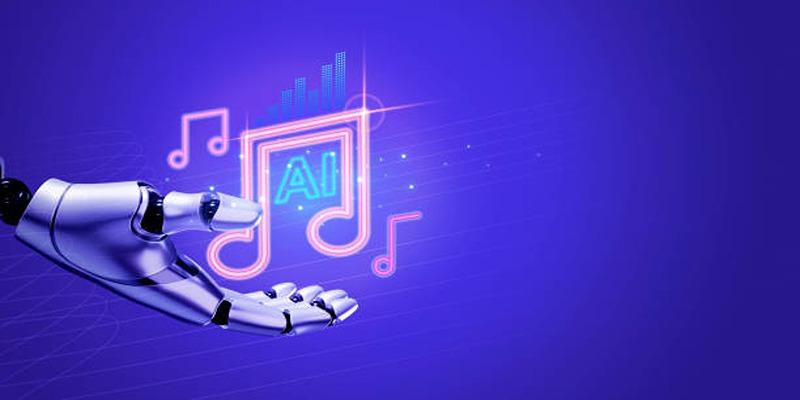
Generative AI music is music that has been generated or altered by an artificial intelligence system. These instruments are trained with massive data of existing music, which they start to perceive the patterns, structures, melodies, and the rhythms characterizing various genres and styles. With this knowledge, they will be able to create completely new pieces of music, ranging in severity, between basic background loops, to multi-instrumental pieces.
The technology is applicable in a number of ways:
These systems aren't just randomly stringing notes together. Deep learning models such as Generative Adversarial Networks (GANs) and Transformers are being used to learn the theory behind music. This enables them to make coherent content and frequently unexpectedly creative and emotional.
In the same way the production of music was transformed by the advent of the synthesizer and the drum machine in the 20th century, the new generation of AI tools has equally given artists new abilities like never before. Although the market is changing rapidly, there are several platforms that have become the early pioneer with each having its own take on AI-based music making.
Suno AI can perhaps be the most popular tool currently available, and can be used to produce all-vocal and vocal-free songs based on quite basic text responses. Need a seafarer sung of software code or a power-pop song on our dog? Suno is able to create a catchy and coherent two minutes track in seconds. Although quality may happen or miss, its capability of creating full-fledged songs with lyrics and vocals has won the imagination of people and incremental power of this technology.
Udio is an upcoming application which provides a text-to-song service just like Suno. Supported by well-known researchers of AI and musicians such as will.i.am, Udio is set to offer greater accessibility and control over the created output. Users are allowed to expand their creations, remix them, and define finer musical components allowing artists to have a more collaborative tool instead of a one-shot generator.
Stable Audio is a developed Stability AI that specializes in creating sound effects and high-quality instrumental music. It does not make vocals at the present, as Suno or Udio. Rather, it does best at producing production-ready sound to podcasters, film producers, and manufacturers seeking to create a background tune or ambient sound. Its capacity to produce longer and structured sound is advantageous as it is a convenient tool among those who create content.

Generative AI is already making its mark both on the industry’s smallest with amateur creators in their bedrooms to the biggest labels in their boardrooms.
AI is not the replacement of many musicians, but an assistant. It may be a potent weapon of creative blockbusters. An AI tool can help a songwriter create dozens of ideas in just a few seconds since it assists a writer in finding a chord progression. It can be used to swiftly mock up a string arrangement, as well as experiment with various drum patterns by a producer.
In this respect, AI is a creative collaborator that expedites the work routine and expands the palette of the artist. It is able to manage the more tiresome sides of the production, and the artist is able to concentrate on the fundamentals of the emotion and concept of the work.
Among the greatest effects of generative AI is that it may reduce the amount of entry barriers to the process of music creation. Musical training does not require many years of practice, nor does studio equipment that costs hundreds of dollars to create a good-sounding tune. Now everyone is able to create their vision of music with simply a computer and an idea. It may bring about a burst of creativity with numerous and alternative voices heard as a result of this democratization. It also provides young musicians with an opportunity to draw demos and create sounds without having spent much money.
Generative AI has also created a Pandora box of legal and ethical issues. The copyright is the most acute problem. The person who owns the output since these AI models are trained on big repositories of existing, copyrighted music is unclear. Assuming an AI comes up with a melody that is dramatically close to a popular song, is this plagiarism?
Artists such as Drake and Taylor Swift have already recorded their voices being cloned and utilised in AI generated songs without their knowledge. This begs some basic identity, ownership questions as to whether an artist has a right to manage his/her own image. Music industry must now be at the brink of trying to draw legal structures and ethical codes to overcome such challenges. Criminal cases are already in progress, and their results will define the way in which AI is going to be exploited in future.
So, will AI replace human artists? The likely answer is no. While AI can mimic styles and generate technically proficient music, it lacks the lived experience, emotional depth, and unique perspective that are the hallmarks of great art. Music is more than a sequence of notes; it's a form of human expression that connects us through shared feelings and stories. An AI can't have a heartbreak, experience a moment of pure joy, or reflect on the complexities of the human condition.
Instead, the future of music will likely be one of collaboration. The most innovative music will come from artists who learn to use AI as a powerful new instrument. We will see hybrid creations where human ingenuity is augmented, not replaced, by machine intelligence. Just as the electric guitar didn't eliminate the acoustic guitar, AI will not eliminate human musicians. It will simply create a new category of music and a new way of making it.
The type of generative AI in music is not something to be afraid of, but to learn about and to interact. It provides musicians with novel production means and promises music fans endless innovations. This technology is evolving at a very fast rate, and it is a turning point to every one in music. As a creator, producer or fan, it is important to research into these tools and what they are capable of doing so that you can get your niche in this new thrilling era.
Failures often occur without visible warning. Confidence can mask instability.
We’ve learned that speed is not judgment. Explore the technical and philosophical reasons why human discernment remains the irreplaceable final layer in any critical decision-making pipeline.
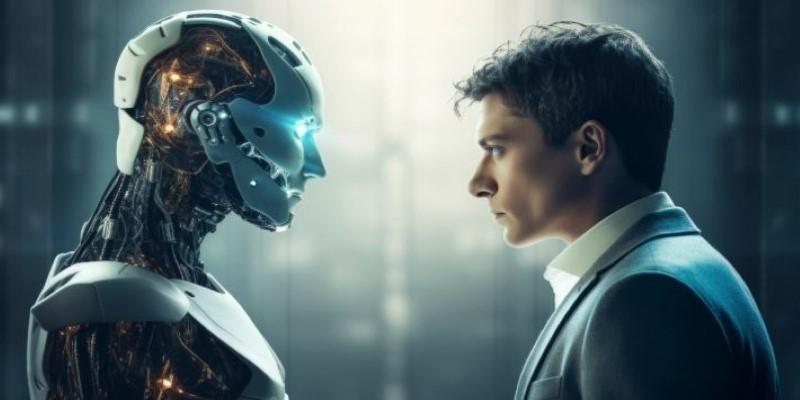
Understand AI vs Human Intelligence with clear examples, strengths, and how human reasoning still plays a central role
Writing proficiency is accelerated by personalized, instant feedback. This article details how advanced computational systems act as a tireless writing mentor.

Mastercard fights back fraud with artificial intelligence, using real-time AI fraud detection to secure global transactions

AI code hallucinations can lead to hidden security risks in development workflows and software deployments

Small language models are gaining ground as researchers prioritize performance, speed, and efficient AI models
How generative AI is transforming the music industry, offering groundbreaking tools and opportunities for artists, producers, and fans alike.
Exploring the rise of advanced robotics and intelligent automation, showcasing how dexterous machines are transforming industries and shaping the future.

What a smart home is, how it works, and how home automation simplifies daily living with connected technology

Bridge the gap between engineers and analysts using shared language, strong data contracts, and simple weekly routines.
Optimize your organization's success by effectively implementing AI with proper planning, data accuracy, and clear objectives.