Forget clunky robots! We are in a new era of robotic dexterity, and machines go about in the world with acumen. This development opens up unimaginable potential in the world of industries both in the gentle and the life-saving surgeries. This guide explores the advancements driving this change, the challenges that remain, and the exciting future that dexterous robots promise.
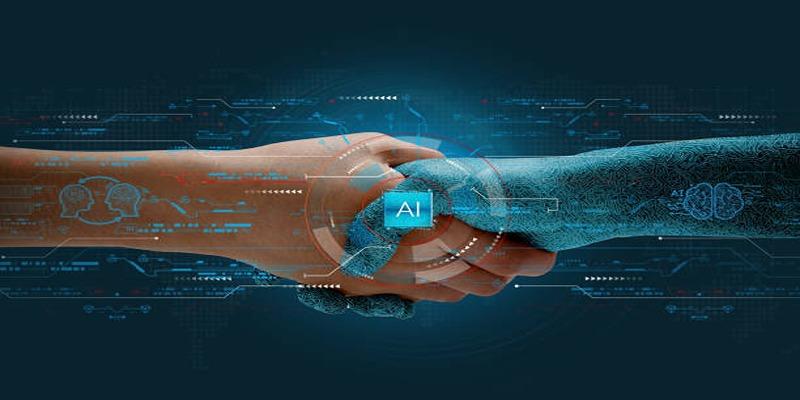
To appreciate how far robotic dexterity has come, it’s important to understand the incredible complexity of what it's trying to replicate: the human hand. We have a masterpiece of biological engineering, to which our hands can be very strong and very delicate at the same time. One hand has the ability to squash a can or to hold a delicate egg without breaking it. All these can be achieved with the help of a complex interaction between bones, muscles, nerves, and a highly sensitive feedback system.
One of the biggest hurdles for robotics has been recreating this sensory feedback loop. Your fingertips have thousands of nerve endings which give your brain an instant reaction of what it feels like, whether you touch it or not; its texture, temperature, shape and weight. This information is handled and processed by your brain to reduce or tighten your grip in a matter of milliseconds. This is the reason why you are able to pick a paper cup without crushing it or a slippery bit of soap without dropping it.
The sense of touch was lacking in the early robots. They also operated under pre-programmed positions and forces which are effective in well organized set-ups where all objects are alike and in their locations. But this life is just real and uncontrollable. To be really useful in dynamic application, a robot must have the capacity to experience and respond to its environment.
Recent years have seen significant progress in overcoming these challenges. The combination of improved devices, more advanced software, and advanced AI is creating a new breed of robots that have amazing manipulative capabilities.
One of the most significant accomplishments has been the invention of powerful tactile sensors. These are sensors that can be incorporated in the grippers or fingers of a robot, which imitate nerve ends of human skin. Other researchers are even developing what has been described as electronic skin or e-skin; a stretchable and flexible substance that is loaded up with an extensive network of sensors.
Not only pressure, but temperature and texture are also registerable by this e-skin, providing the robot with plenty of data on the object it is currently holding. This will enable the robot to undertake micro-adaptations of its grip in real time, as a human being would.
Traditional robots are made of rigid materials like metal and hard plastic. Good and accurate, but this stiffness constrains them with contacting delicate objects or people. Another solution is provided by soft robotics. These robots are inspired and designed after a biological organism such as an octopus and they are made out of elastic compliant silicone.
Soft robotic grippers have the capacity to shape around the form of an item and evenly redistribute the pressure to form a soft yet safe grip. It is why they are recommended in cases when there is a need to possibly harvests fragile crops, such as strawberries or tomatoes, without bruising them. It also renders them safer to work with the human workers since their soft bodies may not injure them in the event of collision.
Hardware is only one part of the equation. The other crucial component is the software that interprets the sensory data and controls the robot's movements. This is where Artificial Intelligence (AI), particularly machine learning, has been a game-changer.
Modern robots are not coded with a program to execute all possible tasks: they have an opportunity to learn by trial and error. A robot can learn a task via a process known as reinforcement learning, a process through which a robot engages in repetitive activities such as picking up different objects. It is fed back on each instance of success or failure. In thousands or even millions of attempts, robot AI model slowly learns which strategy would be the best when gripping various objects (which in many cases is conducted in a simulated environment in order to accelerate the process).
Such a learning-based technique provides the robots with a certain degree of flexibility which could not be achieved before. They are also able to transfer the training to new objects which they have never encountered a challenge included in their functioning in the unstructured surroundings.
The ever-increasing complexity of robotic hands is already making a concrete difference to some industries.
In warehouses, dexterous robots are being deployed for "piece-picking," where they select individual items from a bin of mixed goods to fulfill customer orders. This task, which requires the ability to identify and grasp a wide array of objects, has long been a bottleneck for automation.
Robotic systems such as the da Vinci Surgical System are used in surgery to enable surgeons to have greater precision and control in making a minimally invasive procedure. The second generation of the surgical robots will include haptic feedback that will enable the surgeon to have a feel of the tissue they are handling and this will even enhance the outcome of surgery.
Fruits and vegetables that are of soft nature are being robotized by the use of soft robotic grippers to overcome labor deficit and food waste.
In commercial kitchens, robots are also starting to be introduced, and they can be used to perform more complex tasks, including flipping burgers, making salads, and even decorating cakes with a degree of uniformity robots are finding it challenging to maintain that level of uniformity with humans.
Despite these impressive advances, the quest for human-level dexterity is far from over. Difficulty has still existed in the domains of fine-motor manipulations (e.g., tying shoe laces or threading a needle) and working with objects that are very soft or slippery. The prices and proficiency of such sophisticated systems should also be reduced to allow them to get used across the board.
Innovation is however becoming faster. With sensor technology getting cheaper, AI models are getting more powerful, and our knowledge about motor control is becoming ever-better, we will continue to see robots that can perform more and more complex tasks.
The next-level robotic dexterity is not only the creation of better machines--it is the increase of possibilities of automation. We make tools to help us in all aspects of life such as food production and medicine through enabling the robots to engage with the world more intelligently. The awkward science fiction robots are moving into existence of intelligent, dexterous machines who are willing to perform the tender duties of the future.
Failures often occur without visible warning. Confidence can mask instability.
We’ve learned that speed is not judgment. Explore the technical and philosophical reasons why human discernment remains the irreplaceable final layer in any critical decision-making pipeline.

Understand AI vs Human Intelligence with clear examples, strengths, and how human reasoning still plays a central role

Writing proficiency is accelerated by personalized, instant feedback. This article details how advanced computational systems act as a tireless writing mentor.

Mastercard fights back fraud with artificial intelligence, using real-time AI fraud detection to secure global transactions

AI code hallucinations can lead to hidden security risks in development workflows and software deployments

Small language models are gaining ground as researchers prioritize performance, speed, and efficient AI models

How generative AI is transforming the music industry, offering groundbreaking tools and opportunities for artists, producers, and fans alike.
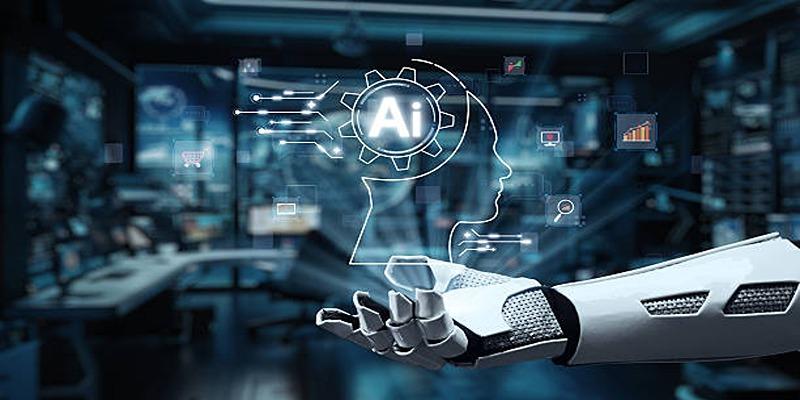
Exploring the rise of advanced robotics and intelligent automation, showcasing how dexterous machines are transforming industries and shaping the future.

What a smart home is, how it works, and how home automation simplifies daily living with connected technology

Bridge the gap between engineers and analysts using shared language, strong data contracts, and simple weekly routines.
Optimize your organization's success by effectively implementing AI with proper planning, data accuracy, and clear objectives.