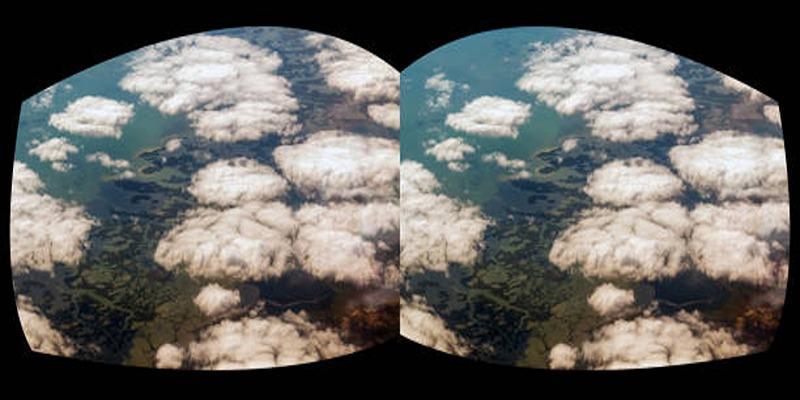
The satellite imagery could be obscured by the cloud cover, which blocks other important details needed in environmental monitoring and analysis. Generative Adversarial Networks (GANs) are a new, effective solution that can smartly recreate what the clouds have hidden. GANs improve the quality of images, recover lost terrain, and provide clear, weather-free images of the world at large through deep learning to analyze images.
The initial version of Generative Adversarial Networks emerged as a type of neural network specialized in generating realistic examples of data. The main components of a GAN are two models: a generator and a discriminator that work in a competitive arrangement.
The adversarial training process causes the generator to continuously evolve until its generated images are almost indistinguishable from true satellite images.
GANs surpass traditional image restoration models for cloud clearance. GANs do not just need pixel-based correction; they also learn to understand the underlying fabric, texture, and even the spatial coherence of terrain characteristics. This will enable them to draw intelligent conclusions about what is happening under the clouds and maintain accuracy and aesthetic realism.
Before the development of GANs, cloud removal was performed using methods such as threshold segmentation, spectral unmixing, and multi-temporal compositing. These techniques were not as successful as they could be, but had several limitations:
Furthermore, such older methods failed to reproduce subtle textures or color differences with the accuracy. GANs address these concerns by training on large datasets of cloudy and clear photographs and learning the complex correlations between visible and obscured attributes.
Developing a powerful GAN model to remove clouds requires both architectural and training creativity. Several major principles make these models more effective:
What is covered by thick clouds cannot always be spotted using optical imagery. Thus, GANs are typically trained using right-hand spectral channels (or wing sensors) and Synthetic Aperture Radar (SAR). Cloudless SAR data also provides structural information that the generator uses to create missing points in the letter.
Multispectral bands, including near-infrared and shortwave-infrared, are also highly important because they can penetrate thin clouds and discriminate more effectively between vegetation and water. The researchers can enhance reconstruction fidelity by a large margin by conditioning the GAN with these auxiliary data sources.
The current GAN architecture incorporates an attention mechanism or transformer blocks to prioritize computational resources within image regions. Attention modules enable the network to learn about long-range relations, as in the example of a river path that continues under a cloudy area.
The use of skip connections between the encoder and decoder layers (a U-Net architecture) ensures that fine details (edges and textures) are not lost during reconstruction. Others also use dilated convolutions to widen the receptive field without increasing computational cost, enabling the network to capture broader contextual features.
In contrast to a basic regression model, GANs have the advantage of implementing composite loss functions, i.e., combining multiple evaluation criteria.
Common components include:
By balancing these aspects, the network not only learns to remove clouds but also generates visually stable, semantically accurate images.
The common steps taken by A GAN-based cloud removal pipeline are as follows:
Cloud detection is performed in the initial step to identify clouded regions. Adaptive thresholding, superpixel segmentation, or spectral index analysis are some of the techniques used to generate binary masks indicating cloudy areas.
The blurred picture, along with auxiliary data (e.g., SAR or multi-temporal inputs), is used as conditioning data by the generator. The processes of normalization and alignment require that the model have homogeneous spectral and spatial inputs.
The generator pre-determines a cloud-free output, and the discriminator measures its authenticity. The generator can be trained to recreate true-to-life features (vegetation patterns, water lines, and city buildings) after many training cycles.
This loss, conditioned by the combined loss, is used to drive the generator towards visual realness and structural fidelity. It is repeated until convergence and normal, cloud-free images are obtained.
Lastly, the image thus created is polished. There are also clear areas where the original image was extracted and complemented with reconstructed parts to avoid redundant corrections and unnatural edges.
To evaluate the quality of images that are removed by clouds, objective and subjective measures are needed:
For example, spatio-temporal GANs trained on the RICE and T-Cloud datasets have achieved SSIM scores of over 92% and PSNRs of more than 30 dB, indicating that GANs can produce near-photorealistic restorations.
GAN-based models do not happen to be devoid of challenges:
To address these challenges, scholars use new techniques such as regularization, domain switching, and multimodal integration. Adaptive filtering is employed by some frameworks, which restrict reconstruction to occluded areas, leaving undisturbed areas of ground and artifacts to a minimum.
Optimizing the clarity of satellite imagery through GAN-based cloud removal marks a significant leap forward in remote sensing technology. By learning the intricate patterns of Earth's landscapes and intelligently reconstructing occluded details, GANs overcome one of the oldest obstacles in optical imaging — cloud interference. While challenges remain, the progress in architecture design, data integration, and hybrid modeling is rapidly transforming this field.
Failures often occur without visible warning. Confidence can mask instability.

We’ve learned that speed is not judgment. Explore the technical and philosophical reasons why human discernment remains the irreplaceable final layer in any critical decision-making pipeline.

Understand AI vs Human Intelligence with clear examples, strengths, and how human reasoning still plays a central role

Writing proficiency is accelerated by personalized, instant feedback. This article details how advanced computational systems act as a tireless writing mentor.

Mastercard fights back fraud with artificial intelligence, using real-time AI fraud detection to secure global transactions

AI code hallucinations can lead to hidden security risks in development workflows and software deployments

Small language models are gaining ground as researchers prioritize performance, speed, and efficient AI models

How generative AI is transforming the music industry, offering groundbreaking tools and opportunities for artists, producers, and fans alike.

Exploring the rise of advanced robotics and intelligent automation, showcasing how dexterous machines are transforming industries and shaping the future.

What a smart home is, how it works, and how home automation simplifies daily living with connected technology

Bridge the gap between engineers and analysts using shared language, strong data contracts, and simple weekly routines.

Optimize your organization's success by effectively implementing AI with proper planning, data accuracy, and clear objectives.